Bitcoin, Ether, Litecoin, Monero, Faircoin… they are already fundamental parts of history world economy. Blockchain, wallet, Proof of Work, Proof of Stake, Proof of Cooperation, smart contracts, atomic swaps , lightning network, Exchanges, … a new vocabulary for a new technology that, if we ignore it, will make us part of a new category of illiteracy 4.0.
In this space we thoroughly analyze the reality of cryptocurrencies, we comment on the most outstanding news and show in an accessible language all the secrets of the world of decentralized currencies, block chain technology and all its almost unlimited possibilities.
What is Blockchain?
Blockchain or chain of blocks is one of the most disruptive technologies of the 21st century. The idea seems simple: identical databases distributed in a decentralized network. And yet, it is being the basis of a new economic paradigm, a way to guarantee the immutability of information, to make certain data accessible in a secure way, to make that data virtually indestructible and even to be able to carry out smart contracts whose terms are fulfilled without human error. Of course, also democratizing money by allowing the creation of cryptocurrencies.
What is a cryptocurrency?
A cryptocurrency is an electronic currency whose issuance, operation, transactions and security are clearly demonstrable through cryptographic evidence. Cryptocurrencies based on Blockchain technology represent a new form of decentralized money over which no one exercises authority and can be used like the money we have known until now with numerous advantages. Cryptocurrencies can acquire the value that the trust of the users grants them, based on supply and demand, the use and also the added values of the community that uses them and builds an ecosystem around them. Cryptocurrencies are here to stay and become part of our lives.
Main cryptocurrencies
Bitcoin was the first cryptocurrency to be created from its own Blockchain and, therefore, is the best known. It was conceived as a means of payment and transmission of value that is simple to use, fast, safe and cheap. Since its code is open source, it can be used and modified to create many other cryptocurrencies with other characteristics and, often, with other more or less interesting ideas and objectives. Litecoin, Monero, Peercoin, Namecoin, Ripple, Bitcoin Cash, Dash, Zcash, Digibyte, Bytecoin, Ethereum… are some of them but there are thousands. Some linked to much more ambitious projects related to technologies that are changing the way we process information, data and even social relations. There are even those issued by governments, as an alleged solution to their economic problems, such as the Petro issued by the government of Venezuela and supports with its reserves of oil, gold and diamonds. Others are the currency of cooperative movements of a markedly anti-capitalist nature and build transitional economic ecosystems towards what they call a post-capitalist era, such as Faircoin. But there is much more than economic ideas around cryptocurrencies: social networks that reward the best contributions with their own cryptocurrency, networks of decentralized file hosting, digital asset markets… the possibilities are nearly endless.
Wallets or purses
To start interacting with the world of cryptocurrencies, you only need a small piece of software, an application that is used to receive and send this or that cryptocurrency. Wallets, purses or electronic wallets read the records of the Blockchain and determine what Accounting entries are related to the private keys that identify them. That is, these applications “know” how many coins are yours. They are generally very easy to use and once the most basic aspects of their operation and security are understood, they become a real bank for those who use them. Knowing how an electronic wallet works is essential to face the future that is already here.
What is mining?
Mining is the way in which cryptocurrencies are minted. It is an innovative concept but one that bears a certain resemblance to traditional mining. In the case of Bitcoin, it is about using the power of computers to solve a mathematical problem posed by the code. It’s like trying to find a password by successively trying combinations of letters and numbers. When, after hard work, you find it, a block is created with new coins. Although it is not necessary to know anything about mining to use cryptocurrencies, it is a concept that you should familiarize yourself with in order to have a true crypto culture.
ICOs, a new way of financing projects
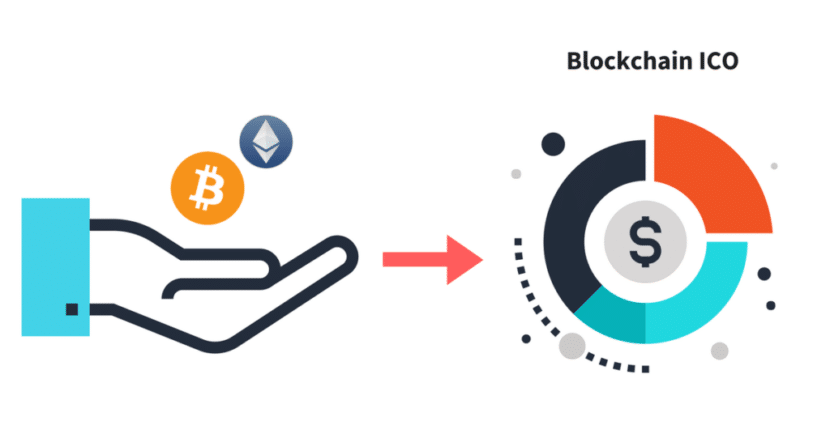
ICO stands for Initial Coin Offering. It is a way in which new projects in the Blockchain world can find financing. The creation of tokens or digital currencies that are put up for sale to obtain financial resources and develop more or less complex projects is totally topical. Before the emergence of Blockchain technology, companies could finance themselves by issuing shares. Now practically anyone can issue their own cryptocurrency hoping that people will see interesting possibilities for the project they want to develop and decide to invest in it by buying some. It is a form of crowdfunding, a democratization of financial resources. Now it is within everyone’s reach to be part of fascinating projects although, also, due to the absence of regulations, ICOs can be launched whose projects are absolute frauds. But that is not an obstacle to turn your eyes to the other side; the possibility of obtaining a good return even from very small investments is there. It is simply a matter of learning a little more about each of these ideas. And here we will tell you the most interesting first.